Всі дослідження

26 лип. 2024
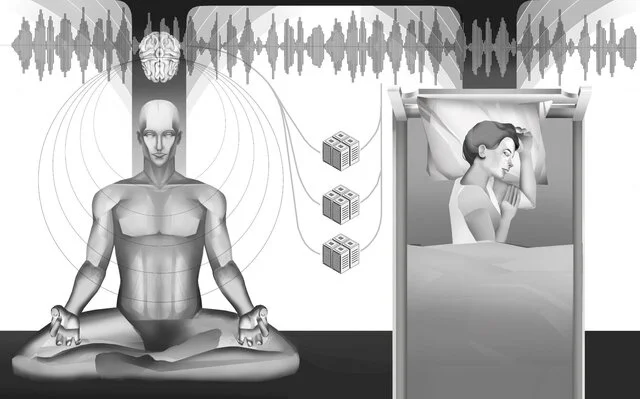
The methodology for diagnosing and managing stress developed by Grivtsova, as an independent method and as part of the preparation for inducing lucid dreams within the framework of the 'Bancheko Extended Algorithm,' and its application in the 'Global Forecasting System,' serves as a means of transferring transcendental states of consciousness within the 'Bancheko-Technology Set.'
The methodology diagnoses stress through brain activity analysis, using neurotraining to restore the alpha rhythm. The method also prepares for lucid dreaming.
Journal:

26 лип. 2024
The methodology for diagnosing and managing stress developed by Grivtsova, as an independent method and as part of the preparation for inducing lucid dreams within the framework of the 'Bancheko Extended Algorithm,' and its application in the 'Global Forecasting System,' serves as a means of transferring transcendental states of consciousness within the 'Bancheko-Technology Set.'
The methodology diagnoses stress through brain activity analysis, using neurotraining to restore the alpha rhythm. The method also prepares for lucid dreaming.
Journal: American Journal of Medical and Clinical Research & Reviews

20 лип. 2024
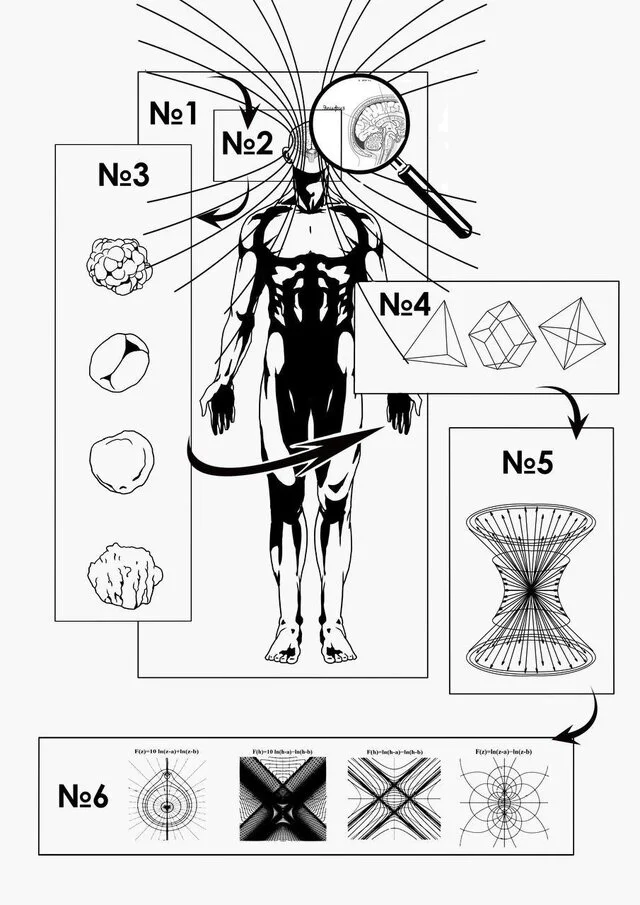
Forecasting Social, Geopolitical, and Economic Events Using the 'Banchenko-Technology'
This study investigates if dreams can predict future events using AI algorithms. It involves participants recording their dreams over years, with AI analyzing patterns. Three hypotheses are tested: dreams contain predictive information, AI can identify correlations, and prediction accuracy improves with longer data collection. The study is observational, involving detailed dream recording and advanced data analysis.
Journal: Japan Journal of Research
20 черв. 2024
Forecasting Social, Geopolitical, and Economic Events Using the Banchenko Technology (Banchenko Algorithm, Banchenko Mnemonic Synchronization): 'Banchenko-Market' (Market of Predictions, Lucid Dreams, and Other Transcendental States of Consciousness Allowing High-Probability Forecasts)
This study investigates if dreams can predict future events using AI algorithms. It involves participants recording their dreams over years, with AI analyzing patterns. Three hypotheses are tested: dreams contain predictive information, AI can identify correlations, and prediction accuracy improves with longer data collection. The study is observational, involving detailed dream recording and advanced data analysis.
Journal:

29 січ. 2024
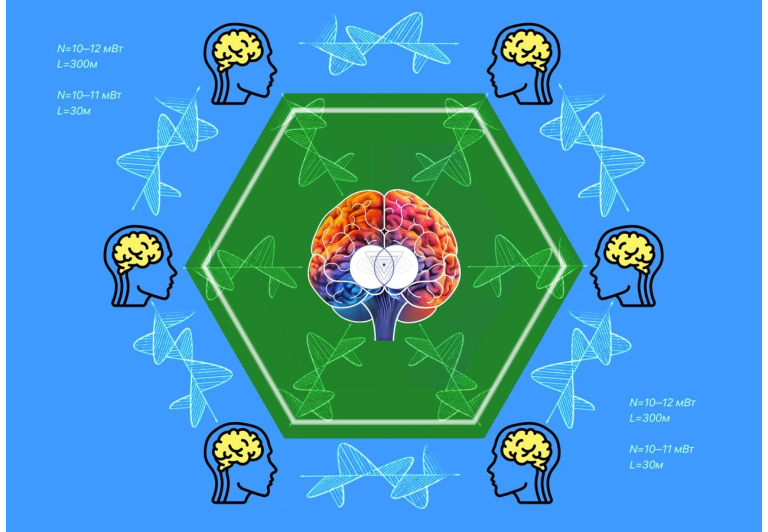
Application of the 'Banchenko Dream Synchronization Mnemonics Method' for Joint Synchronization of Dream Elements (including Lucid Dreams) within the 'Blokhin Dream Network Concept' and Analysis of Results based on the 'Kapustin Dream Match Search AI Model'
This research aims to study the potential for dream synchronization, including lucid dreams, among a group of participants using the concepts of 'memes' and 'tag-memes' within the framework of the 'Banchenko Algorithm' and the 'Mnemonic Dream Synchronization Technique of Banchenko.' Additionally, it aims to assess the effectiveness of a new artificial intelligence model built and trained by Mykhailo Kapustin for identifying correlations in the dreams of the participants. In the study, eight participants from different countries kept dream journals for a month. Then, synchronization was conducted over 16 days, during which the participants watched the TV series 'The OA' together and discussed it. The study included the analysis of data over 30 days, which helped identify the effectiveness of dream synchronization and artificial intelligence.
18 січ. 2024
Application of the 'Banchenko Dream Synchronization Mnemonics Method' for Joint Synchronization of Dream Elements (including Lucid Dreams) within the 'Blokhin Dream Network Concept' and Analysis of Results based on the 'Kapustin Dream Match Search AI Model'
This research aims to study the potential for dream synchronization, including lucid dreams, among a group of participants using the concepts of 'memes' and 'tag-memes' within the framework of the 'Banchenko Algorithm' and the 'Mnemonic Dream Synchronization Technique of Banchenko.' Additionally, it aims to assess the effectiveness of a new artificial intelligence model built and trained by Mykhailo Kapustin for identifying correlations in the dreams of the participants. In the study, eight participants from different countries kept dream journals for a month. Then, synchronization was conducted over 16 days, during which the participants watched the TV series 'The OA' together and discussed it. The study included the analysis of data over 30 days, which helped identify the effectiveness of dream synchronization and artificial intelligence.
Journal:

8 трав. 2023
Funding for fundamental science research based on blockchain technologies: 'Banchenko Market' (market of lucid dreams and other transcendental states of consciousness)
Recently, interest in the sale of NFTs has significantly increased. These digital assets can be used not only to address the issue of owning digital assets but also as the basis of a business model for funding fundamental academic research. This article demonstrates the feasibility of using a business model for financing scientific research through the application of NFTs, cryptocurrencies, and blockchain technologies. The feasibility of establishing the 'Banchenko Market' using such models is considered. The study identifies four business models using NFTs.
DOI: 10.55186/2413046X_2023_8_8_414
Journal: Moscow Economic Journal

24 бер. 2023
Research on methods of inducing lucid dreaming in the framework of 'Banchenko Algorithm'
This article explores the methods of inducing lucid dreams developed and researched by Denis Yurievich Banchenko over a twenty-year period. It discusses a unique methodological algorithm called the 'Banchenko Algorithm,' which effectively induces lucid dreaming. The study also applied methods developed by Lev Konstantinovich Shishkin in collaboration with Banchenko, which increase the duration and depth of lucid dreams. The main research methods are induction methods based on theoretical hypotheses, as well as the analysis and synthesis of scientific information in the field of lucid dreaming. The research results confirm the positive effect of the Banchenko Algorithm and propose it as a useful methodology for studying lucid dreaming.
DOI: 10.15761/JBN.1000134
Journal: Brain and Nerves