Arcanum12th global educational project
Embedded systems
programmingArduino programming in C++
- Program structure, loops, timers
- Working with pins, analog/digital signals
- PWM, using interrupts
Working with peripherals
- Serial, SPI, I2C
- Connecting displays and communication modules
- Arduino ++ Raspberry Pi ++ PC interface
STM32, ESP32 microcontrollers
- Architecture, working with registers
- HAL vs LL approach
 CN
Director of the Biomedical Research Department, co-founder and co-owner of the independent international research group, holding and alliance ASRP (ARSP)
Arduino programming in C++
- Program structure, loops, timers
- Working with pins, analog/digital signals
- PWM, using interrupts
Working with peripherals
- Serial, SPI, I2C
- Connecting displays and communication modules
- Arduino ++ Raspberry Pi ++ PC interface
STM32, ESP32 microcontrollers
- Architecture, working with registers, HAL vs LL approach
Key topics
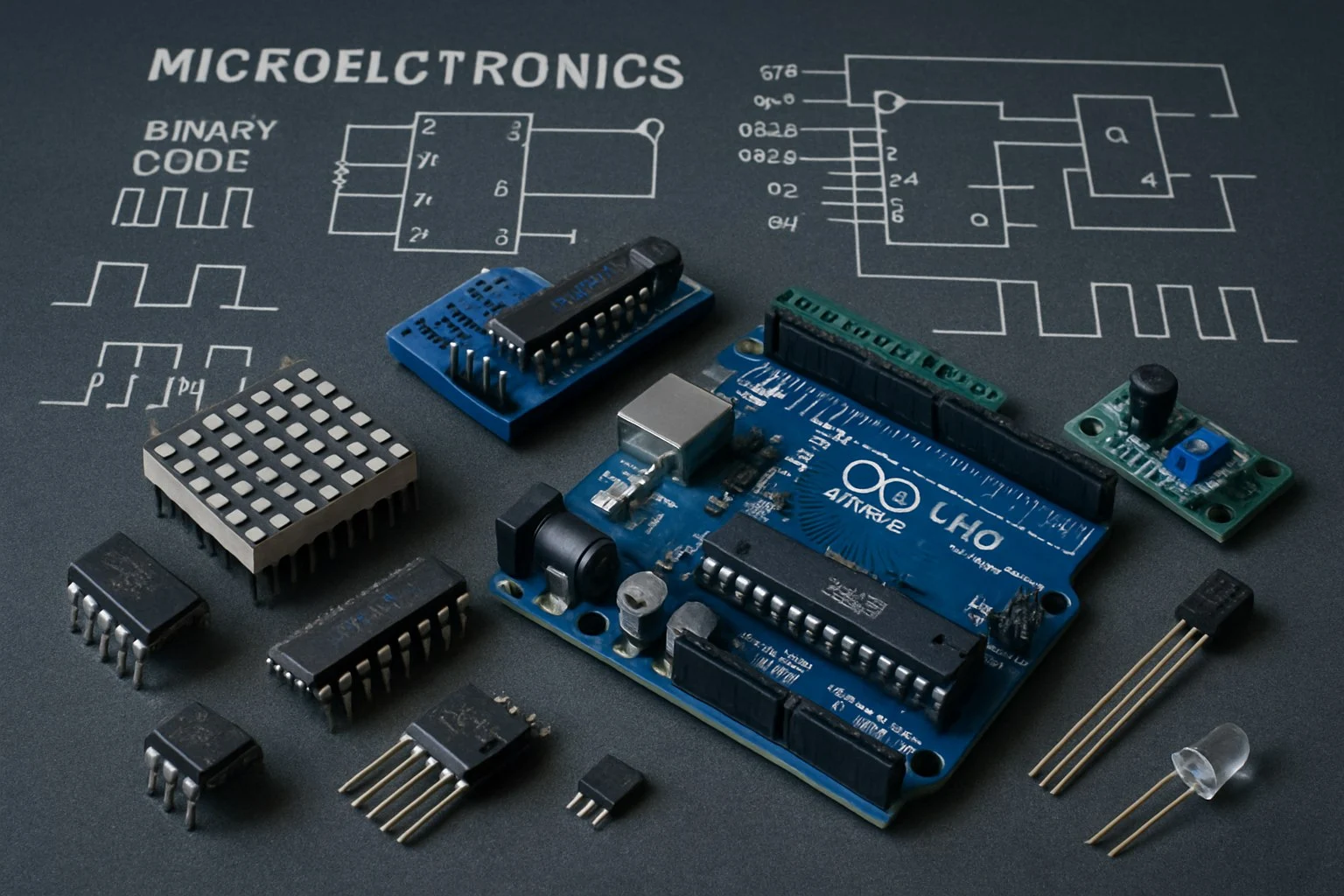
- Working with Arduino UNO and ESP32 in C++
- Delay loops, PWM, interrupt handling
Who this course is for
The course suits engineers, technical students and developers who want to go deeper into embedded development. Basic C/C++ knowledge is welcome but not required.
What you will get
- Working with Arduino UNO and ESP32 in C++
- Delay loops, PWM, interrupt handling
Module I. Arduino programming in C++
Program structure, loops, timers. Working with pins, analog and digital signals. PWM signal generation, using interrupts to handle events in real time.
Module II. Working with peripherals
Serial, SPI, I2C. Connecting displays and communication modules. Arduino ↔ Raspberry Pi ↔ PC interaction.
Module III. STM32, ESP32 microcontrollers
Architecture, working with registers. HAL vs LL approach. Using wireless interfaces: Bluetooth, LoRa, Wi-Fi
Module IV. Low-level optimisation
Power consumption. Accounting for crystal oscillators and system frequencies. Memory and timing management.